How long professional pilot career pathway programs take depends on your starting point, training pace, and required certifications. A student with no flight experience follows a different sequence from someone with solo credit or a Private Pilot Certificate. Overall costs also depend on the training and flight time needed to complete each stage.
It makes sense to weigh the time commitment and financial investment before choosing a route. The right path should reflect your current experience and career goals, rather than assume every student starts from the same place.
This guide compares starting points for new students and pilots with prior experience, explains which training stages affect timelines and costs, and covers how tuition support and flight-instructor work can factor into career planning. You’ll also learn how to plan your next step toward commercial pilot training and a professional aviation career.
Key Takeaways
- Map your starting point, from no flight experience to solo credit or a Private Pilot Certificate, to understand which training stages come next.
- Compare program costs by looking at what training includes and which factors can affect the overall investment, rather than relying on a single headline figure.
- Consider flight-instructor work as a potential way to build experience while developing teaching and communication skills.
- Review cadet program qualifications and tuition assistance carefully to understand how each pathway fits your experience and career goals.
- Explore structured training options that take you through key pilot certifications toward commercial aviation.
Flight-instructor work to build experience
Flight instruction turns newly earned teaching qualifications into practical flying experience. In some airline pathways, instructor work can also help cadets build time toward later program milestones.
United’s Destination 225° and PSA Airlines’ Cadet program are named U.S. airline pathways. Their cadets train through flight-school partners, with the relevant school tied to the pathway and training arrangement.
Eligibility and Flight-School Flexibility
Before choosing an instructor route, compare its entry criteria with your certificates, logged experience, and career goal. A flight school may organize training around its own syllabus, while an airline pathway may include additional partner-specific steps.
Age and flight experience can matter differently for instructor certification and career programs. Treat them as separate checks: identify the credential you need to instruct, then review the airline pathway’s eligibility rules.
For example, a pilot with a Commercial Pilot Certificate can consider instructor training as a next step. A student still working toward commercial privileges has a different sequence to complete first.
Flight and Simulator Hours
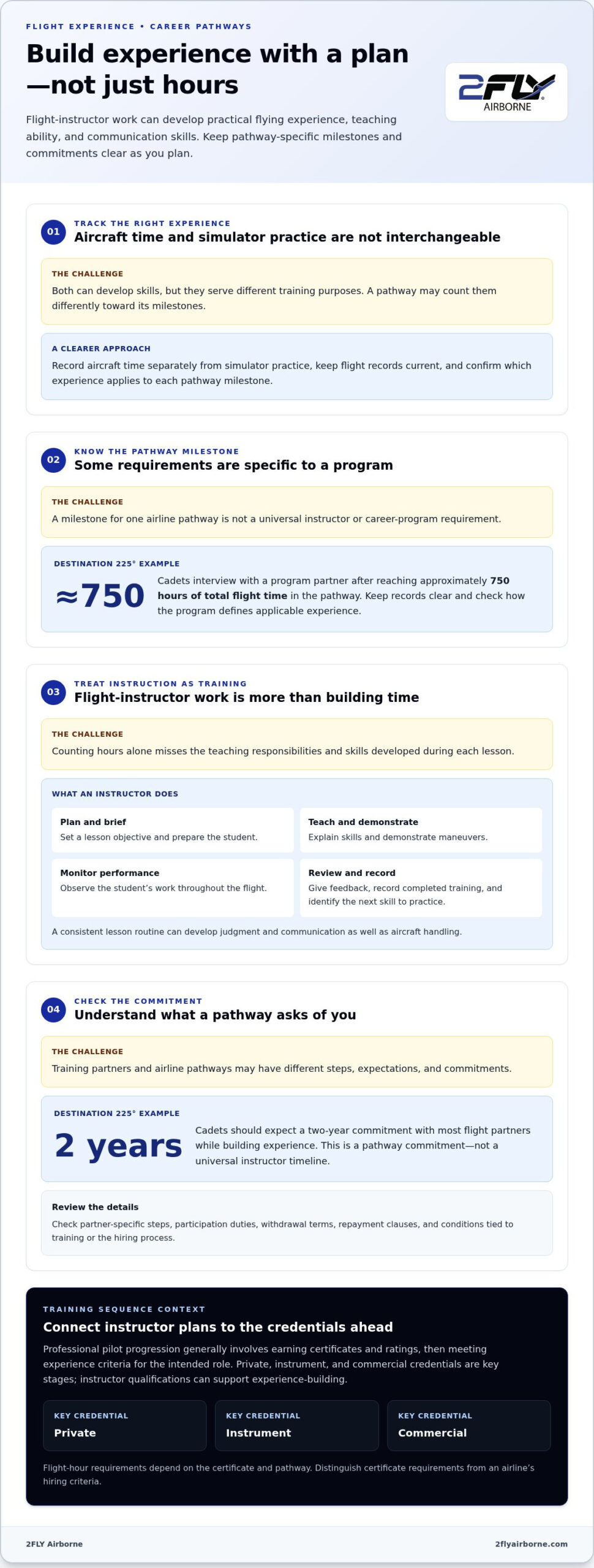
Track aircraft time separately from simulator practice. Both can develop skills, but they serve different training purposes, and pathway milestones may count them differently.
Destination 225° cadets interview with a program partner after reaching approximately 750 hours of total flight time in the pathway. That milestone shows why students should keep clear, current flight records and understand which experience applies.
When assessing an instructor role, connect each planned flight to a learning objective. Teaching a traffic pattern, practicing instrument procedures, and conducting a cross-country lesson each develop different competencies.
Instructor work is active training, not simply time-building. A flight instructor plans lessons, briefs students, demonstrates maneuvers, monitors performance, and gives feedback after each flight. These responsibilities can strengthen judgment and communication as well as aircraft handling.
Build a consistent routine. Before each lesson, review the student’s objective and expected conditions. Afterward, record completed training and identify the next skill to practice. This makes progress easier to discuss with a chief instructor or pathway advisor.
Program commitments can shape how long this experience-building stage lasts. Destination 225° cadets should expect a two-year commitment with most flight partners while building experience. That period connects training and work experience within the pathway, rather than describing a universal instructor timeline.
Use training and recruiting events to prepare for the transition to professional flying. Practice explaining your certificates, teaching experience, and goals clearly. Bring specific questions about partner interviews and how logged experience applies to program milestones.
In the United States, airline-pilot progression generally involves earning pilot certificates and ratings, then meeting the experience criteria for the intended role. Private, instrument, and commercial credentials are key stages; instructor qualifications can support experience-building. Flight-hour requirements depend on the certificate and pathway, so distinguish certificate requirements from an airline’s hiring criteria.
Program tuition, financing, and possible training-center premiums
U.S. career pathways include airline-linked cadet programs and flight-school career programs. United’s Destination 225° and PSA Airlines’ Cadet program are examples of airline-linked routes. Compare what each pathway covers before focusing on its overall tuition figure.
Costs for professional pilot career pathway programs reflect the training sequence, not just a course label. Compare aircraft use, instructor time, simulator sessions, ground school, materials, and multi-engine training. A training center’s facilities, technology, or included services may also affect its tuition. Review these components side by side to see how they fit your training plan.
For a specific school, tuition depends on the training plan, aircraft and simulator use, instruction, materials, and included ratings. The price is provided after a quote request. Separate required training from optional items, then compare the same components across written estimates. This makes it easier to understand why totals differ.
Ask how payments align with training progress, and distinguish tuition from personal living and travel costs. Financing arrangements can vary in eligibility, repayment terms, and timing. Review written terms before committing, especially when airline sponsorship connects funding with later participation.
Airline-sponsored pathways can also involve contractual commitments. Read the agreement for participation duties, withdrawal terms, repayment clauses, and conditions tied to a training partner or hiring process. United Destination 225° works with flight partners, so understand the obligations that apply to that pathway.
Training pace affects budgeting. An accelerated, full-time schedule can concentrate aircraft bookings, instructor lessons, and ground study into a shorter sequence. Before choosing that pace, compare your availability and study routine with the school’s syllabus. If you’re balancing work, you may need a different schedule and payment plan.
Facilities and technology shape the training environment. Compare how a school uses aircraft, simulators, briefing spaces, and learning materials. Consider, for example, how simulator sessions connect with later aircraft lessons and whether ground-school content follows the same training sequence.
Ground school builds knowledge for flight lessons and assessments. When comparing budgets, check whether instruction, study resources, and progress reviews are included. A clear syllabus shows how classroom topics support practical exercises, rather than treating ground study as an unrelated add-on.
Multi-engine training is another cost component to assess. Check whether the pathway includes a Multi-Engine Rating, how aircraft and instructor time are scheduled, and how the training fits the certification plan. Each item can affect the overall investment.
Location can influence logistics as students connect with different flight-school partners. Compare travel, housing, or scheduling needs alongside tuition. For help considering payment options as part of your budget, review flight-training financing considerations.
Cadet program levels and qualifications
Cadet pathways connect flight training with an airline-related career route, but their entry points differ. Compare each program’s published criteria with your certificates and experience. Distinguish flight-school enrollment from airline pathway selection, since each may involve separate applications and progression steps. This helps you identify what you can apply for now and what training remains.
Medical eligibility is one criterion to review early. Destination 225° applicants must obtain or be able to obtain an FAA First-Class Medical Certificate. Treat this as a specific program condition, not a universal requirement that defines every pathway. Keep medical eligibility separate from flight-school admission and other program qualifications when building your comparison.
Cadet programs may use different levels or entry categories to reflect a candidate’s training stage. The label alone does not explain the requirements. Read the program criteria and note the certificates, experience, and application materials it specifies. If a requirement uses unfamiliar wording, record the exact term and clarify its meaning before deciding how it applies to your record.
PSA Airlines, for example, requires Cadet applicants to hold a Private Pilot Certificate. This gives you a concrete comparison: a student without the certificate needs a different immediate plan from a certificate holder considering the same application. Check each airline’s criteria individually, since one program’s prerequisite is not a shared industry standard.
- Entry stage: Note the certificates and experience required to apply.
- Medical criteria: Record the specific certificate or qualification named.
- Progression: Identify the program’s next training or selection step.
Before applying, prepare a concise record of your certificates, flight experience, and training history. List credentials separately from hours and completed courses to represent each accurately. For example, state whether you hold a Private Pilot Certificate and separately describe any instrument training underway. This makes it easier to compare your profile with the stated criteria.
Next, turn each program’s criteria into a simple status list: met, in progress, or not yet started. This is a planning tool, not a substitute for the program’s application review. It helps you identify whether to apply, complete a training stage, or gather documentation.
Finally, examine how the pathway connects training progression with airline selection. Destination 225° and PSA Airlines offer distinct examples of airline-linked routes, but their criteria are not interchangeable. Use each program’s own terms and milestones to decide whether its structure fits your current qualifications and professional direction.
Requirements vary by pathway. PSA Airlines requires Cadet applicants to hold a Private Pilot Certificate, but that prerequisite is not universal across programs.
Cadet program tuition assistance
Tuition assistance can ease upfront pressure, but its structure matters as much as its headline. For airline-linked training, distinguish direct payments, scholarships, loans, and deferred costs. Each affects repayment, eligibility, and obligations differently. Treat assistance as a written funding term, not an informal promise. Identify who provides the funds and when they apply.
Start by clarifying what the assistance covers. A tuition award might apply to a defined training stage, while a loan creates a repayment obligation. Deferred payment changes the timing but does not erase the balance. Sponsorship may also include participation conditions. For example, if a cadet leaves a program, they should know which costs remain payable.
Use this checklist when comparing funding terms:
- Coverage: Identify which training stages and expenses qualify.
- Timing: Record when funds reach the school or student.
- Eligibility: Note academic, flight-progress, or employment conditions.
- Repayment: Find out what happens after withdrawal or a changed plan.
Application materials can affect access to assistance. Gather flight-training records, school enrollment details, and any requested financial documents before applying. If a cadet pathway requires a progress review, keep certificates and training records organized. Clear documentation connects the requested support with the appropriate training stage.
Read conditional funding terms closely. An agreement might connect assistance with continued participation, a training partner, or later employment steps. These terms are not interchangeable. A tuition loan, for example, remains a debt, while a scholarship follows its award conditions. Before signing, ask how a change in training pace affects funding.
Build a personal funding map before enrollment. List each training stage, its payment source, and any repayment trigger, then compare the map with the program agreement. This can reveal gaps between scheduled tuition payments and when aid arrives. It also clarifies how savings, education loans, or awards fit together.
Keep airline-pathway selection separate from funding approval. A cadet can meet an application milestone without automatically receiving financial support. Review the eligibility process for each award and record its decision date. If United’s Destination 225° is under consideration, distinguish its pathway requirements from any separate funding arrangement. Never assume program participation itself pays tuition.
Before committing, summarize the agreement in plain language: what the funds cover, which conditions apply, and what repayment follows withdrawal. Compare your summary with the signed terms, not just a verbal explanation. This careful review helps aspiring pilots weigh financial support alongside training progress and career obligations.
Entry paths for students with zero experience, solo credit, or a private pilot certificate
Your first step depends on what you can document now. With no flight experience, identify the school’s entry process and first training stage. With solo credit, organize your logbook and training records for review. With a Private Pilot Certificate, compare your credentials with the pathway’s next stage.
Medical certificates, exams, and pilot certifications are part of professional training, but their sequence depends on the route. Review the medical criteria and examination steps for your chosen pathway, then list the certificates it requires. Do not assume one program’s entry conditions apply to every airline route.
No flight experience: Ask for the training sequence from initial instruction to the program’s next application milestone. A written outline can show where ground study, flight lessons, and knowledge assessments fit. Note which stage comes before the first certificate and what follows. This gives you a practical starting plan without relying on another student’s timeline.
Solo credit: Gather your logbook, instructor endorsements, and training records. Ask the school to compare completed training with its syllabus before planning the next lessons. A clear record distinguishes documented experience from training that still needs evaluation. Keep copies organized, especially if you received instruction at another school.
Private Pilot Certificate: Record the certificate details and any ratings or training underway. Compare them with the pathway’s stated entry stage and next requirements. This helps certificate holders focus the discussion on what comes next, rather than giving a general account of flight experience.
- Starting from zero: Request the first-stage sequence and application steps.
- With solo credit: Prepare logs and prior-school records for review.
- With a certificate: Match credentials to the pathway’s next stage.
To apply, choose a pathway, review its criteria, and prepare the requested records. Submit your application through the program’s process, then track any required follow-up. Keep a copy of each submission and note any outstanding materials. This simple system helps prevent missing documents from slowing communication.
Before committing, compare pathway options using the same questions: What experience is required for entry? Which training stage follows acceptance? What records must accompany the application? A written comparison makes the differences clear without treating programs as interchangeable.
Your starting point should guide your first conversation and the training plan that follows. Bring accurate records, explain your current stage clearly, and ask how the pathway evaluates prior experience. This preparation turns an uncertain starting point into a deliberate next step.
2FLY Airborne: FAA Professional Pilot Program
2FLY Airborne’s FAA Professional Pilot Program gives aspiring pilots a structured route through key training stages. It can suit students beginning their flight training or pilots planning their next certification step.
The program connects foundational preparation with professional pilot development. Training options include the Private Pilot Certificate (PPL), Instrument Rating (IR), and Commercial Pilot Certificate (CPL). These certifications develop distinct skills, from core aircraft operation to instrument procedures and commercial flying.
Use the program to discuss how your current experience fits the training sequence and which certification comes next. For a focused conversation about your pilot training goals, contact 2FLY Airborne.
Turn your pilot goal into a training plan
Your next move is to match your experience with a training sequence you can pursue consistently. Define your career goal, identify your starting point, and set a clear priority for your next stage of flight training. This preparation makes conversations about professional pilot career pathway programs more focused and useful.
2FLY Airborne offers an FAA Professional Pilot Program, along with the Private Pilot Certificate (PPL) and Instrument Rating (IR). These options can help structure your progression toward professional aviation, with training choices suited to different stages of pilot development.
Take the next step by discussing your goals and training path with 2FLY Airborne. Contact 2FLY Airborne about your pathway, and move forward with purpose toward the cockpit.
Frequently Asked Questions
How long does it take?
Training time depends on your experience, lesson frequency, and progress through each stage. A student who trains consistently may follow a different schedule from someone balancing lessons with work or other commitments. For a practical estimate, map available training days against study time and expected certification stages. Weather, aircraft scheduling, and readiness for assessments can also affect your pace.
What support is provided?
2FLY Airborne’s FAA Professional Pilot Program follows a structured curriculum, with training that covers the progression toward professional pilot qualifications. The selected program’s curriculum includes its training components, such as flight instruction, ground school, and simulator sessions. For example, ground study helps prepare you to apply aviation knowledge during practical training. Review the curriculum as a whole to understand how each element supports your development.
What are the eligibility requirements for airline pilot pathway programs?
Eligibility depends on the airline and pathway, so compare each program’s criteria with the academy’s enrollment requirements. A pathway may assess medical qualifications, certificates, flight experience, and application materials at different stages. For example, applications may open before a later partner-interview milestone. Separate the requirements for starting flight training from those for progressing through airline selection.
How long do pilot career pathway programs take from enrollment to airline employment?
The full route includes training, experience-building, pathway milestones, and an airline’s selection process. Flight school is one stage; interviews, hiring decisions, and any required transition steps also affect the overall timeline. For planning, map the sequence from enrollment through certification, experience accumulation, and application milestones. Track each stage rather than treating training completion as an employment date.
How much do pilot training pathway programs cost, including tuition and fees?
Program pricing depends on the selected training plan, its curriculum, aircraft and instructor use, simulator sessions, and other components. Request a quote for the specific plan to see its applicable price. Compare estimates by checking which stages and materials they include, and distinguish tuition from personal expenses such as travel or housing. Avoid comparing headline totals without matching the training included.
What financing, scholarships, and student loan options are available for pilot training?
2FLY Airborne offers monthly payment options for career programs, so full tuition isn’t required upfront. Build your funding plan by comparing payment timing with training expenses, then review scholarship and student-loan terms separately. For any award or loan, note eligibility, disbursement timing, repayment duties, and what happens if your training schedule changes. This gives you a clearer view of how each funding source fits your plan.
What licenses and flight hours are required to become an airline pilot in the U.S.?
U.S. airline-pilot progression generally includes Private, instrument, and commercial credentials, followed by meeting the experience criteria for the intended role. Flight-hour requirements vary by certificate and pathway; Destination 225° cadets interview with a program partner after approximately 750 pathway flight hours.
What FAA medical certificate, exams, and certifications do aspiring professional pilots need?
The article identifies Private, instrument, and commercial credentials as key stages, and says Destination 225° applicants must obtain or be able to obtain an FAA First-Class Medical Certificate. It does not provide specific exam requirements.
Article by
2FLY Airborne
2Fly Airborne is a professional flight training organization dedicated to developing the next generation of skilled, confident, and safety-focused pilots. With decades of combined aviation experience, our team of certified instructors provides structured, real-world training designed to prepare students for both checkrides and long-term success in the aviation industry.
Content Disclaimer
Some blog content is generated with the assistance of automated tools and may not always be fully accurate or up to date. Please verify all aviation-related information with official sources or a certified instructor. For additional guidance or clarification, we encourage you to contact one of our training advisors at 2Fly Airborne.